Inflation rose proportionately faster in high-income countries, according to the report.

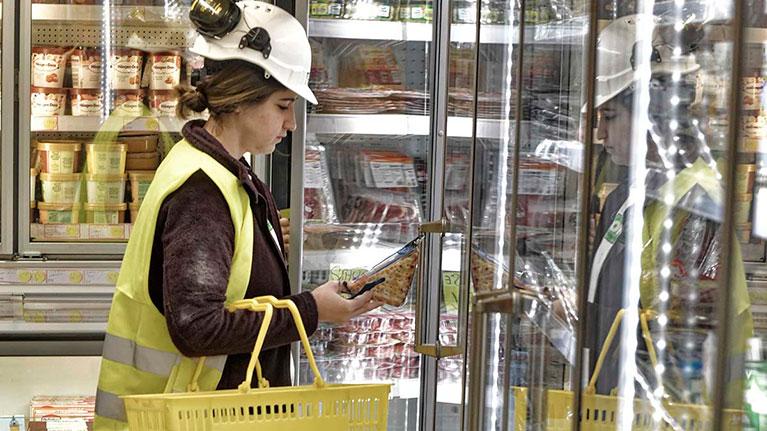
United Nations: The severe inflationary crisis combined with a global slowdown in economic growth – driven in part by the war in Ukraine and the global energy crisis – are causing a striking fall in real monthly wages in many countries, including in the Asia-Pacific region, according to a report from the International Labour Organization (ILO).
The report, released Wednesday, said the crisis is reducing the purchasing power of the middle classes and hitting low-income households particularly hard.
The Global Wage Report 2022-2023: The Impact of inflation and COVID-19 on wages and purchasing power, estimates that global monthly wages fell in real terms to minus 0.9 per cent in the first half of 2022 – the first time this century that real global wage growth has been negative.
“The multiple global crises we are facing have led to a decline in real wages. It has placed tens of millions of workers in a dire situation as they face increasing uncertainties,” Gilbert Houngbo, the ILO Director-General, said in a statement in Geneva, the headquarters of the UN agency, warning of the potential consequences.
“Income inequality and poverty will rise if the purchasing power of the lowest paid is not maintained,” he said. “In addition, a much-needed post-pandemic recovery could be put at risk. This could fuel further social unrest across the world and undermine the goal of achieving prosperity and peace for all.”
The report reveals how the severe inflationary crisis, combined with a slowdown in economic growth – driven in part by the war in Ukraine and the global energy crisis – have affected pay packets worldwide, including in the G20 leading industrial nations.
It is estimated that in the first half of the year, real wages declined to -2.2 per cent in advanced G20 countries and grew by 0.8 per cent in emerging G20 countries. This is 2.6 per cent less than in 2019, the year prior to the COVID-19 pandemic.
Inflation rose proportionately faster in high-income countries, according to the report, which also includes regional and country data.
For example, in Canada and the United States, average real wage growth dropped to zero in 2021, and then fell to -3.2 per cent in the first half of this year.
During the same period, Latin America and the Caribbean saw real wage growth decline to -1.4 per cent, and then to -1.7 per cent.
Meanwhile, real wage growth increased to 3.5 per cent last year in Asia and the Pacific in 2021 but slowed to 1.3 per cent during the first six months of this year.
However, when China is excluded, growth increased by 0.3 per cent and 0.7 per cent, respectively.
Rising inflation has had greater impact on poorer families, as most of their disposable income is spent on essential goods and services which generally experience greater price increases compared to non-essential items.
In many countries, inflation is also eroding the real value of minimum wages, the report further noted.
The ILO has underscored the urgent need for well-designed policy measures to help wage workers and their families maintain their purchasing power and living standards.
They are critical to prevent the deepening of existing levels of poverty, inequality and social unrest.
“We must place particular attention on workers at the middle and lower end of the pay scale,” said Rosalia Vazquez-Alvarez, one of the report’s authors.
“Fighting against the deterioration of real wages can help maintain economic growth, which in turn can help to recover the employment levels observed before the pandemic. This can be an effective way to lessen the probability or depth of recessions in all countries and regions.”
One effective tool could be adequate adjustment of minimum wage rates, said the ILO, given that 90 per cent of its 187 Member States have minimum wage policies in place.
Collective bargaining and “strong tripartite social dialogue” – that is, between government, employers and workers representatives – also can help to achieve adequate wage adjustments during a crisis.
Other recommendations include measures that target specific groups, such as providing vouchers to low-income households so they can purchase essential goods, or cutting Value Added Tax (VAT) on these items which will reduce the burden inflation places on households while also helping to bring down inflation generally.
This Democrat’s accountability plan has Trump fuming
- 18 hours ago
Russia released a US prisoner. What did they get out of it?
- 18 hours ago
GM promises smarter cars, faster updates, and autonomous dry-cleaning runs
- 20 hours ago

Field Marshal Munir vows total defeat of terrorists with public support
- 10 hours ago

FinMin Aurangzeb, WB discuss Pakistan's economic reform agenda
- 3 hours ago

US military bans BYD vehicles from strategic air base in Japan
- 9 hours ago
PM Shehbaz sets illustrative wheat price at Rs4,500 per 40kg for 2027
- 3 hours ago

The Cornell rape case has surfaced a hidden divide among progressives
- 18 hours ago

10 terrorists, including one female, killed in Gwadar: ISPR
- 7 hours ago

How the biggest renewable energy project in US history finally got built
- 18 hours ago

What Christina Applegate’s misdiagnosis reveals about MS
- 18 hours ago

Conversational Gemini navigation comes to Apple CarPlay
- 20 hours ago